AC Running But Not Blowing Cold Air? Common Causes & Fixes
AC running but not blowing cold air? Learn common causes like bad capacitors, dirty coils, or low refrigerant and when it’s time to call an HVAC technician.
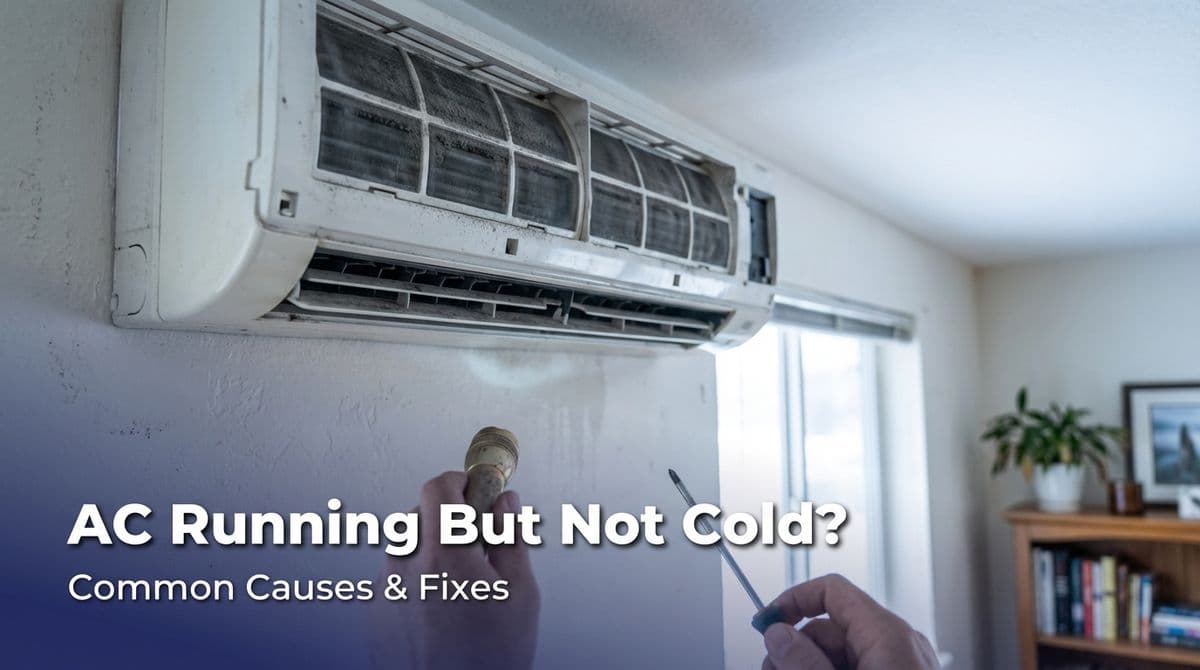
AC Running But Not Blowing Cold Air? Here’s What Might Be Wrong
We recently got a call from a homeowner — let’s call her Lisa — who sounded pretty frustrated. Her air conditioner was running, the outdoor fan was spinning, but the house just wasn’t getting cool. She mentioned they’d had a similar problem about five years ago and a technician had replaced “something that started with a C.”
As we talked it through, it became clear she was probably remembering the capacitor. That’s a very common reason an AC will run but not actually blow cold air.
Since this is a question we get a lot, I’ll walk you through the most common causes we see in homes every week, what you can safely check yourself, and when it’s time to call an HVAC technician.
First Things First: Basic Checks Before You Call
When Lisa called, her fan was running and the system had power, so we could skip the very first troubleshooting steps. But in case you’re just starting to investigate, here’s what we usually ask on the phone:
- Is the thermostat set to “cool” and below room temperature? It sounds obvious, but thermostats get bumped or switched to “heat” more often than you’d think.
- Is the fan set to “auto” or “on”? If it’s on “fan only,” the blower will run but the AC won’t be cooling.
- Have you checked your air filter? A badly clogged filter can restrict airflow so much that the system ices up and stops cooling.
- Do you feel any air at the vents? If air is coming out but it’s room temperature, that’s different from no air at all.
If everything above looks normal and the system is still not blowing cold air, that’s when we start thinking about components like the capacitor, compressor, or low refrigerant.
The Capacitor: A Small Part That Causes Big Problems
On the phone, Lisa told us she’d been told years ago that her problem “would probably be that” before the tech even arrived. In many cases, that “that” is the capacitor — and we see this failure a lot, especially in hot weather.
What does a capacitor do?
- It stores a small electrical charge.
- It gives the compressor and fan motor a boost to start and keep running.
- When it fails, the motor may hum, struggle to start, or run weakly.
When the capacitor is failing or dead, you might notice:
- The outdoor fan runs, but the system doesn’t cool well.
- The compressor tries to start, then clicks off.
- A humming noise from the outdoor unit with little or no cooling.
In Lisa’s case, we explained that a capacitor replacement is often a straightforward repair. For her planning purposes, we let her know there’s a flat diagnostic fee (which we apply toward the repair), and a typical capacitor replacement runs a set price once we confirm that’s actually the issue.
Important: Capacitors store electricity even after the power is off. Swapping one out is not a safe DIY job unless you’re trained and equipped. We strongly recommend leaving this to a professional.
Other Common Reasons Your AC Isn’t Blowing Cold
While capacitors are common culprits, they’re not the only reason an AC can run without cooling properly. On service calls like Lisa’s, we usually check for a few other issues:
1. Dirty Outdoor Condenser Coil
Dust, grass clippings, and cottonwood fluff can clog the outdoor coil. When that happens, the system can’t dump heat outside efficiently, so your home never really cools down.
What you can do:
- Turn off power at the disconnect or breaker.
- Gently rinse the coil from the top down with a garden hose (no high pressure).
- Keep at least 2 feet of clearance around the unit (trim bushes, move debris).
2. Frozen Indoor Coil
If you have weak airflow and see ice on the refrigerant lines or at the indoor unit, the evaporator coil may be frozen. Causes include:
- Very dirty air filter or blocked vents.
- Low refrigerant charge from a leak.
- Blower motor issues.
What you can do: Turn the system off and let it thaw completely, replace the filter if it’s dirty, and make sure supply and return vents are open. If it ices up again, it’s time for a professional diagnosis.
3. Low Refrigerant or Compressor Problems
Lisa mentioned she thought a compressor had been replaced years ago. Compressors can fail, but they’re usually a last resort diagnosis. Before that, we look at refrigerant levels and search for leaks.
Signs of a refrigerant or compressor issue include:
- AC runs almost nonstop but never reaches the set temperature.
- Some parts of the house feel cooler than others.
- Hissing or bubbling sounds near the indoor or outdoor unit.
Refrigerant handling and compressor diagnostics require EPA-certified equipment and training, so this is definitely in the “call a pro” category.
When to Call an HVAC Technician (And What to Expect)
During our call, Lisa wanted to know two things very clearly: what the visit would cost and whether she’d be stuck paying for repairs she hadn’t agreed to. Those are fair questions.
Here’s how we handle situations like hers:
- Clear diagnostic fee: We charge a flat visit fee to come out, inspect the system, and pinpoint the problem.
- Fee applied to repairs: If you decide to move forward with a repair, we apply that diagnostic fee toward the cost of the work.
- Upfront pricing: Once we find the issue — capacitor, refrigerant leak, compressor concern, or something else — we present options and pricing so you can decide.
- Scheduling flexibility: Like Lisa, some homeowners prefer a specific time window or to have a spouse home. We do our best to accommodate that, and we explain that weekend or overtime appointments may cost a bit more because we’re paying our technicians overtime.
What You Should and Shouldn’t DIY
To sum it up, here’s a quick guide you can use before you call:
- Safe to DIY: Check thermostat settings, replace the air filter, visually inspect and gently rinse the outdoor unit, make sure vents are open and unblocked.
- Call a pro: Capacitor replacement, electrical issues, refrigerant leaks or charging, compressor diagnosis, repeated coil freezing, or any burning smells.
If your AC is running but not blowing cold air, you’re not alone — we walk homeowners through this every summer. A quick, professional diagnosis usually saves time, money, and a lot of sweat. If you’re noticing symptoms like Lisa described, it’s probably time to have a technician take a look and get your home comfortable again.